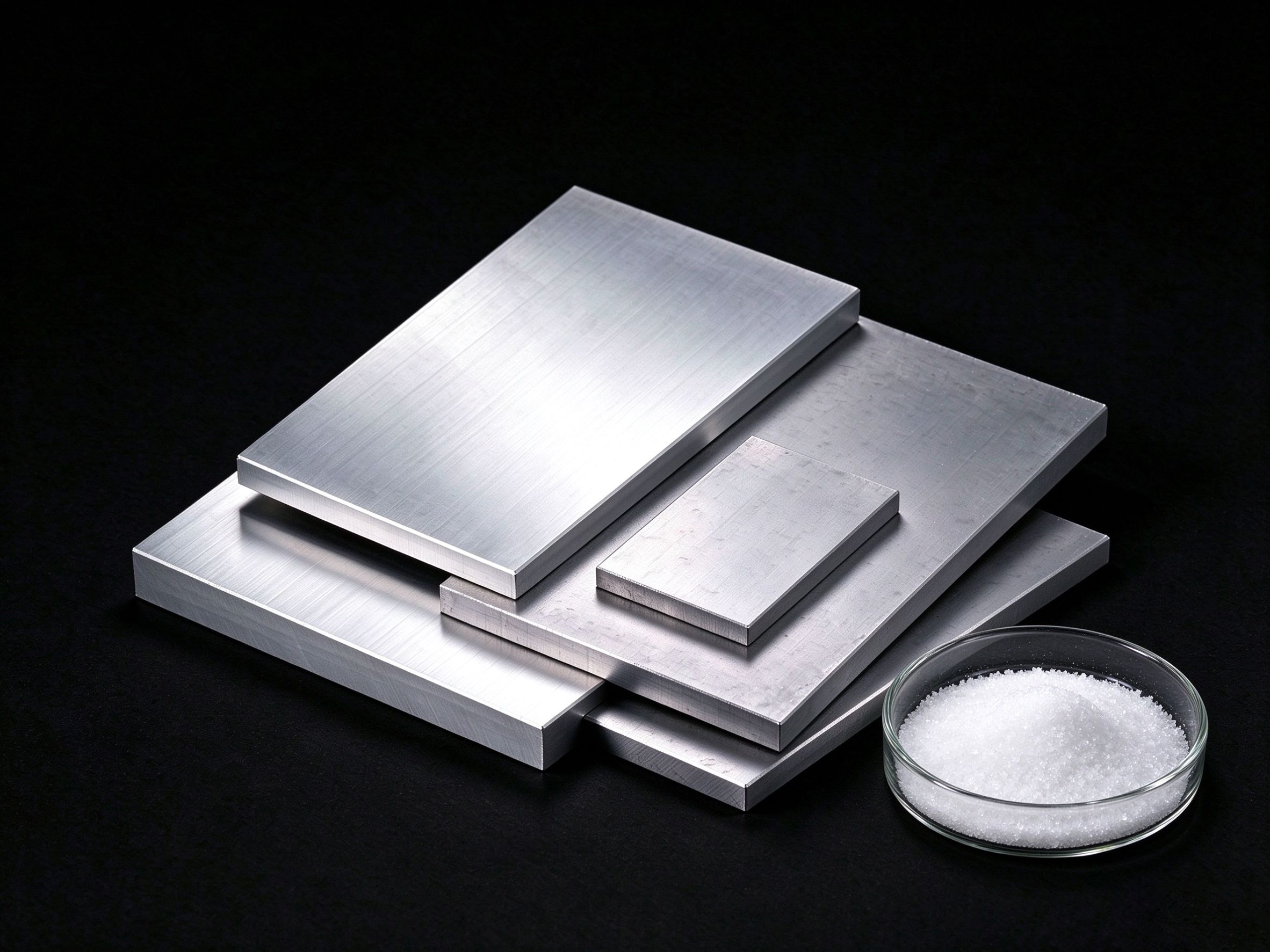
Among common metallic materials, magnesium, aluminum, and their alloys are chemically active and highly prone to losing electrons and undergoing oxidation. This leads to surface oxidation and discoloration, galvanic corrosion, pitting corrosion, and other problems, resulting in reduced strength, degraded performance, and even brittle fracture. During magnesium alloy machining, machining fluids often become black and odorous after only a few days of use, black corrosion spots appear on workpiece surfaces, and the pH value rises sharply. At the same time, as the market's demand for green chemistry continues to increase, products such as nitrites and boric acid are gradually fading out of the market. There is an urgent need for a green, safe, and efficient rust-preventive product—Triacid.
Baischem has independently developed and produced Triacid rust-preventive additive in multiple concentrations. It features low chlorine content, stable acid value, and hard-water resistance, making it suitable for machining fluid formulations for aluminum, magnesium, and other metals and their alloys.
Why are magnesium, aluminum, and their alloys easily corroded?
Aluminum is a typical amphoteric metal: it is easily corroded by acids at low pH and by alkalis at high pH. Therefore, the pH buffering window of its machining fluid is extremely narrow. Once it exceeds this range, problems such as corrosion and discoloration will appear on the workpiece surface. In 7075 aluminum alloy, copper and aluminum form micro-galvanic cells. Once pitting corrosion occurs, it easily propagates deep into the alloy. Therefore, the difficulty in inhibiting corrosion of aluminum alloys lies in how to effectively inhibit the hydrogen evolution reaction in an alkaline environment, thereby reducing the corrosion rate.
Magnesium has a standard electrode potential of −2.37 V, while iron has a standard electrode potential of −0.44 V. In comparison, magnesium is more active and is extremely easily corroded in aqueous environments. The magnesium hydroxide film formed when magnesium contacts water is loose and porous, making it difficult to provide effective protection; it is highly susceptible to further corrosion by chloride ions and dissolved oxygen in water-based fluids. Hydrogen produced during corrosion further damages the film, making it difficult to form a dense protective film. Therefore, conventional passivation mechanisms are basically ineffective for magnesium alloys. In addition, if iron, copper, nickel, and other impurities deposit during the use of water-based machining fluids, they will further increase the cathodic area and accelerate corrosion.
Why choose Triacid as a corrosion inhibitor?
Triacid molecules contain three carboxyl groups (—COOH) and can firmly anchor to metal surfaces in metalworking fluids. Compared with monocarboxylic and dicarboxylic acids, Triacid has higher and more stable adsorption strength.
For aluminum alloys, carboxylate groups can undergo chemisorption on aluminum surfaces through a ligand exchange mechanism. The inhibitor concentration required to completely cover the aluminum surface is significantly reduced, and the corrosion inhibition efficiency can exceed 99%. For magnesium alloys, the synergistic adsorption of multiple carboxyl groups can more effectively seal the pores in the Mg(OH)₂ film and improve the compactness of the corrosion product layer.
In addition, the three carboxyl groups have strong chelating ability. They can "lock" heavy metal ions such as Fe²⁺, Cu²⁺, and Ni²⁺ released during corrosion in solution, preventing them from depositing on magnesium alloy surfaces and thereby slowing corrosion at the source.
Furthermore, the three carboxyl groups give Triacid strong pH buffering capacity. Its organic portion can become embedded in the inorganic film, forming an organic–inorganic composite structure, so that the flexibility and compactness of the film are simultaneously improved.
Summary
Triacid combines three functions—adsorption film formation, metal ion chelation, and pH buffering—and is suitable for various water-based precision machining fluid formulations. It not only provides rust prevention for steel, but also exhibits excellent rust-preventive properties for aluminum, magnesium, and other metals. Baischem Technology has an independent R&D team of doctoral researchers and more than ten years of production and quality inspection experience, providing customers with full-process technical support from production to use. The product quality has reached an internationally leading level. It has been put into production and use by domestic and overseas customers and has received unanimous praise. It is a reliable and stable choice you can trust.
< PREVIOUS PAGE
暂无NEXT PAGE >
Replacing Sulfur-Based Molecular Weight Regulators: Performance Advantages and Application Prospects of AMSD
2026-10-10
2026-09-21

2026-08-27

2026-07-31

2026-07-14

Headquarters
Bais Chemical Technology

+86-571-86108202
info@baischem.com
Linping District, Hangzhou, China


